Is Fish Better Than Beef for Global Warmiong
5 Mins Read
With the climate crisis climbing to the top of the global agenda, more than people are beginning to take notice of the connection betwixt our consumption choices and the carbon footprint information technology leaves behind. While some questions about the footprint of food can announced to exist relatively straightforward, the reality may non always exist every bit unproblematic equally it seems. Here, in our Light-green Queen Food Footprint Series, we tackle some of the complexities surrounding nutrient and examine which choices are really the most planet-friendly. This week, we compare seafood vs. meat, and accept a look at the carbon footprint of dissimilar types of seafood and meats as well.
The carbon footprint associated with animal agriculture has driven many consumers to forgo or reduce meat products and instead opt for fish and other seafood as their alternative protein source. While often guided by the belief that eating fish and seafood comes at a reduced environmental touch, this merely holds truthful in some cases, and importantly depends on which type of seafood or meat production yous are weighing up against.
Of course, to reduce the carbon footprint of your plate equally much as possible, scientists across the board concur that eating a institute-based diet – swapping out all meat, poultry and seafood for a vegan protein source – is the most environmentally friendly pick. Accounting for multiple proxies of a food'southward environmental impact, from production processes and state utilise to water wastage, transportation and packaging, the recent assay by Our World in Data confirms that every bit a dominion of thumb, it becomes clear that establish-based food produces the least carbon emissions.
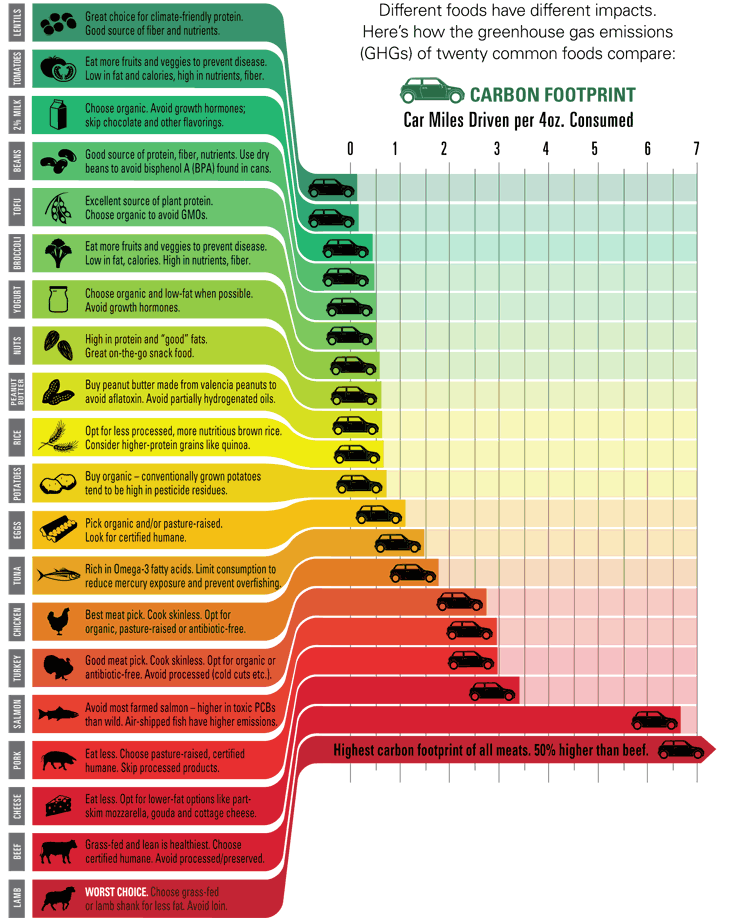
When it comes to what is the most carbon-friendly amongst animal products, poultry meats such as turkey and chicken win out confronting other meats such every bit lamb and beef. As shown in the above graph past the US Environmental Working Grouping (EWG), lamb has the highest carbon footprint of all, producing an average of 20.44 kilograms of carbon dioxide for each kilogram of the meat. This is before accounting for transportation, which we have recently revealed makes less impact on the overall footprint of food than nosotros might think. Much of the carbon footprint of lamb comes from the methane emissions released by sheep through belches and waste in the rearing process.
This is closely followed by beef, which produces only 5 kilograms fewer carbon dioxide emissions than lamb. Pork stands somewhere in the center between poultry and beef, producing effectually four.62 kilograms of carbon dioxide for each kilogram of the same product. Poultry produces around half of that of pork. So if y'all had to choose between unlike types of meat, your best bet is to stick to chicken or turkey over lamb, beef and pork.
The flick becomes more complicated when we compare meat to seafood and fish products. Seafood does tend to have a smaller carbon footprint than animal proteins, generally considering fishing does not crave farmland and livestock rearing, but not always. Farmed salmon, for instance, has a college carbon footprint than chicken or turkey because it requires fish feed and fuel employ for fisheries, which generates iv.xiv kilograms of carbon emissions per kilogram of salmon. Then if y'all are trying to cull the lower carbon option and need to choose between chicken or farmed salmon, opting for chicken is probably more carbon-friendly.

In addition to carbon emissions, you may also exist concerned about the other environmental impacts of farmed fish species such as salmon. Farmed seafood requires the utilize of large amounts of pesticides that leach and pollute the sea, which then destroys sea habitats and harms marine life.
So are wild catches any better? Probably non. According to global nonprofit Oceana, wild fishing uses fossil fuel-powered vessels, which also spews out carbon emissions, and how much it does depends on what species are existence targeted. Among wild seafood catches, crustaceans such as prawns and lobsters can fire an estimated 10,000 litres of fuel per catch, because nets and traps used to catch shellfish are much heavier than other types of dish.
Amongst all fish and seafood species, small schooling species such as anchovies, mackerel and herring are the lowest carbon options, averaging around 80 litres of fuel per grab because fishermen employ purse-like nets to surround these schools of fish.
But caveats nonetheless exist if nosotros look at other environmental factors. If you lot are worried about plastic pollution, for instance, nigh all commercial line-fishing operations use methods such as trawling and longlines, which are at some signal discarded in the bounding main, making upward almost 50% of the body of water plastic waste. Commercial fishing also kills non-targeted species known as bycatch – these include dolphins, body of water turtles and sharks. At the current rate of commercial fishing, overall marine populations are depleting then quickly we could be seeing near species consumed past humans going extinct by 2048, according to WWF estimates.

Y'all might also think twice most consuming seafood altogether if yous are wary of ethical problems, since the line-fishing industry has long been mired in human rights abuses, from modern slavery to child labour.
Lesser line: in general, seafood tends to exist on the lower end of the carbon scale, on par with more carbon-friendly types of meat such as craven. Among different types of meat, lamb and beef are the most carbon-intensive, so it is best to avoid them as much as possible, along with shellfish, wild catches and crustacean seafood meats that also tend to come with a higher footprint than smaller schooling fish species and poultry. Only ultimately, plant-based protein sources top the charts for sustainability, besides every bit being the most ethical and healthiest choice of all.
Bank check out the other parts of our Nutrient Footprint Series:
‣ Is choosing local always the most eco-friendly choice?
‣ Should yous quit almond milk?
Lead prototype courtesy of Pexels.
Source: https://www.greenqueen.com.hk/food-footprint-seafood-meat-climate/
0 Response to "Is Fish Better Than Beef for Global Warmiong"
Post a Comment