Commentary: Cute otters and pangolins get saved but are ugly animals a lost conservation cause?
SINGAPORE: In 2017, when an otter bit a French daughter in Gardens by the Bay, many observers attributed the accident to defensive behaviour as humans got also close to a wild animal.
If it was a macaque in the scenario, we would look less sympathetic comments towards the animal.
Similarly, otters pond in waterways are a welcome sight, with many members of public snapping photos and posting them on social media.
If a python were resting in the waterways instead, Animal Concerns Research and Instruction Society (ACRES) and National Parks Board (NParks) would exist receiving calls to remove the snake.
We urban folk may not even be equipped in dealing with such situations. The Singaporean Pest Management Association in September admitted pest companies were "defective in the handling of wild animals", subsequently a clip of personnel roughly removing a python from a drain went viral.
READ: Commentary: Are we inept at treatment wild animals that come our mode?
READ: IN FOCUS: How urbanised Singapore is learning to live with its wild animals
The signal of highlighting these scenarios is non to criticise otters nor the bias afforded to them. Their conservation in Singapore is an international success and a national pride.
Cheers to decades-long efforts of cleaning upwardly Singapore'south formerly polluted waterways, otters have gone from the brink of local extinction to today's growing population. Catching a glimpse of them today continues to please locals and foreigners akin.
THE BIAS IN CONSERVATION
The reason nosotros raise these parallels is to make sense of what factors drive this differential treatment, and why it is dangerous to practise so.

In that location is a bias in conservation towards charismatic species – compelling or charming animals that inspire devotion in people. Think giant panda, Bengal tiger and sea turtle.
While at that place is scarce data on how much charisma favours animals in getting funding or support, conservationists worldwide cite the difficulties of getting people to intendance about less well-known species.
The Zoological Society of London institute that of the "evolutionarily distinct and globally endangered" (EDGE) species tracked, more than lxx per cent do not receive enough conservation attention.
Commentary: The wonder of articulate skies and returning wildlife is our new climate trouble
These unique species – frequently the last surviving members of an evolutionary line – bridge mammals, birds, amphibians, reptiles and even corals.
The Gild also found that more than half of EDGE mammals get low or very depression attention, but it is worse for other groups – two thirds of Border corals are being neglected. The activeness plan to save these species is lacking or outdated, or they receive very little to no research.
In Singapore, some charisma-challenged yet highly threatened and ecologically important species include the littoral fern (Dipteris conjugata) and horseshoe crabs.
READ: Commentary: The truth backside returning wild animals is less feel-good than yous call back
Environmental IS More than Circuitous
The prioritisation toward charismatic species could misrepresent the condition of the environment, as only well-known and well-funded species are studied enough to exist listed as "endangered".
But if only charismatic species receive protection considering of their attractive advent and entreatment, we volition ignore the complication of the ecosystems in which they thrive.
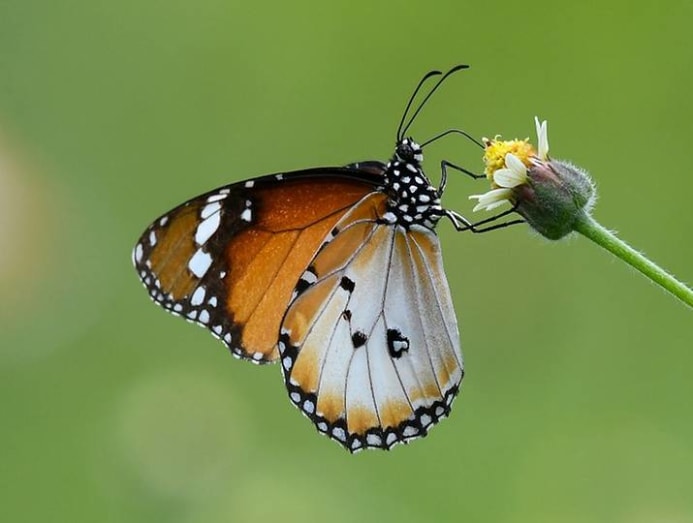
Many may exist familiar with the plight of the critically endangered pangolin or even the Raffles' banded langur, but some may exist less aware of our vanishing insects. Of the one million animal and establish species around the world facing extinction in this century, one-half are insects.
Hither in Singapore, about half our native butterflies have gone locally extinct since the 1850s, mainly due to deforestation.
Apart from the fluttering butterflies, many other insects perform vital ecological roles. They don't simply pollinate the fruits and vegetables we swallow; the common beetles, flies and cockroaches keep soils healthy by breaking down organic material. This process allows decomposition to occur and recycles nutrients back into the soil.
Many charismatic fauna too depend on insects as a food source – the native pangolin, for example, feeds on ants and termites.
READ: Commentary: The trouble with sharing cute exotic animal pics
Beyond the invertebrates, fungi, plants and the microorganisms are role of the aforementioned ecosystem and contribute as much or even more than.
Mangroves are a prime number instance of such a rich ecosystem, and also serve equally a significant repository of carbon. Co-ordinate to geographer Dr Dan Friess of National Academy of Singapore, "they tin can shop three to five times more carbon per hectare than other forest types (typically) do".
He noted that mangroves and besides seagrasses are oftentimes neglected equally compared to other carbon sinks such as rainforests and tropical habitats in the fight confronting climatic change.
READ: How Singapore's mangroves can contribute in the battle against climatic change
Even the organisms we detest play a disquisitional role. Scientists have called for conservation efforts to include parasites, since only about 10 per cent of parasite species have been identified.

Parasites provide ecological balance by preventing the overpopulation of whatever species in an ecosystem. They may be despised as carriers of diseases and causes for illnesses, only only four per cent of them act in that capacity.
RISKS OF NEGLECTING ECOLOGY
Nonetheless, in that location's a reason why charismatic animals feature then prominently in conservation efforts.
These animals have widespread popular appeal and tin be used effectively to garner public support for wider biodiversity goals.
Some endangered animals like elephants and sea turtles serve as flagship or umbrella species. Protecting them channels resource and support into preserving their habitats, which benefits their not-charismatic counterparts.
READ: Commentary: Tigers belong in the wild, non in our homes, the streets or farms
Still, the truth is that not many charismatic species are keystone species, which are essential to the integrity of the ecosystem.
Preferential handling toward charismatic species runs the chance of turning biodiversity conservation to solely animal protection, which is no longer ecology.
Even if nosotros stretch the survival of charismatic threatened species, in the long run, neglecting the other less highly-seasoned wildlife and habitats they depend on volition not guarantee their condom from extinction.
From a broader movie, the neglected keystone species will fade, so will our green and blue spaces, as too much resources go to preserving the populations of a few beautiful and cuddly animals. Naught will be preserved if we proceed our myopic vision for wildlife conservation.
READ: Commentary: Let Singapore's green spaces abound wild
THE Claiming AHEAD
Climate change is going to be a major claiming for us. CNA reported that up to half of Singapore'southward wildlife species could vanish by the end of the century if we go about business equally usual.
WATCH: Climate change: Upwards to half of Singapore's wild animals species could disappear by end of century | Video
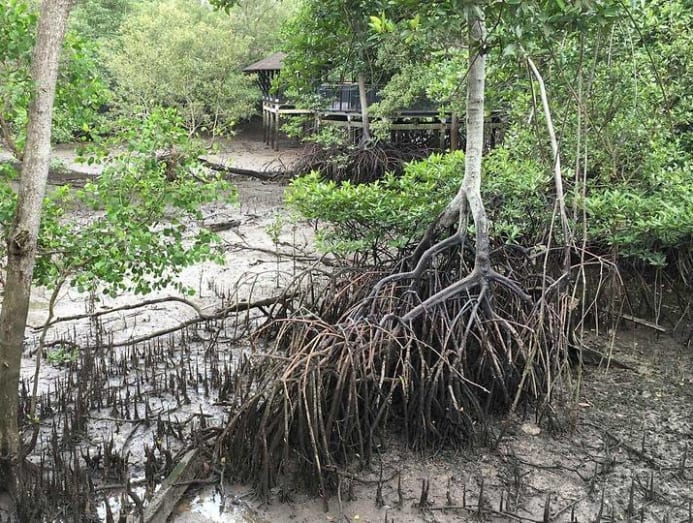
The preservation of nature and not just a few species is part of the climatic change mitigation strategies – which is why nature-based solutions to climate modify accept been gaining traction.
Scientists in Singapore are studying how protecting mature mangrove forests could remove the large amounts of carbon dioxide we emit. These forests besides support fisheries and go on coastlines intact, ultimately benefitting other inhabitants similar otters.
Our education efforts about biodiversity should also pin towards the ecology of wildlife, rather than a few selected species, and this undertaking needs to start upstream in our schoolhouse curriculum.
READ: Commentary: This new Ministry of Sustainability and Environs looks pretty promising
Additionally, the emphasis has to turn to local species and habitats. Singaporeans tin easily identify an orangutan or a giraffe but non a colugo nor a pangolin.
If an oriental pied hornbill is to perch on a roadside tree, you lot are more likely to hear curious passers-by exclaim that it is a toucan.
Other times, a monitor lizard basking in the sun on a boardwalk may attract anxious voices surprised by the presence of a Komodo dragon.
READ: Commentary: Want stronger protection for animals? Empower beast welfare groups to carry out enforcement
NATURE AN All-encompassing ENTITY
The recent change in NParks mission to transform Singapore from a "Garden Metropolis" into a "City in Nature" is applaudable. More importantly, this marks a shift in perspective on what nature means to us.
Just calculation greenery in our built environment or conserving a few endangered animals is not enough for a "Urban center in Nature". We must begin to understand nature as an all-encompassing entity instead of parts of a whole.
This agreement is crucial in ensuring all wildlife that call Singapore dwelling have a future, including their ecosystems. We tin can then enjoy the benefits of living in harmony with nature.
Andie Ang is Research Scientist at Wildlife Reserves Singapore Conservation Fund and President of Jane Goodall Constitute (Singapore). Karl Png is Co-founder of Singapore Youth Voices for Biodiversity.
Source: https://cnalifestyle.channelnewsasia.com/commentary/commentary-cute-otters-and-pangolins-get-saved-are-ugly-animals-lost-conservation-cause-293501
0 Response to "Commentary: Cute otters and pangolins get saved but are ugly animals a lost conservation cause?"
Post a Comment