george Wants You to Know: Shes Really Melissa
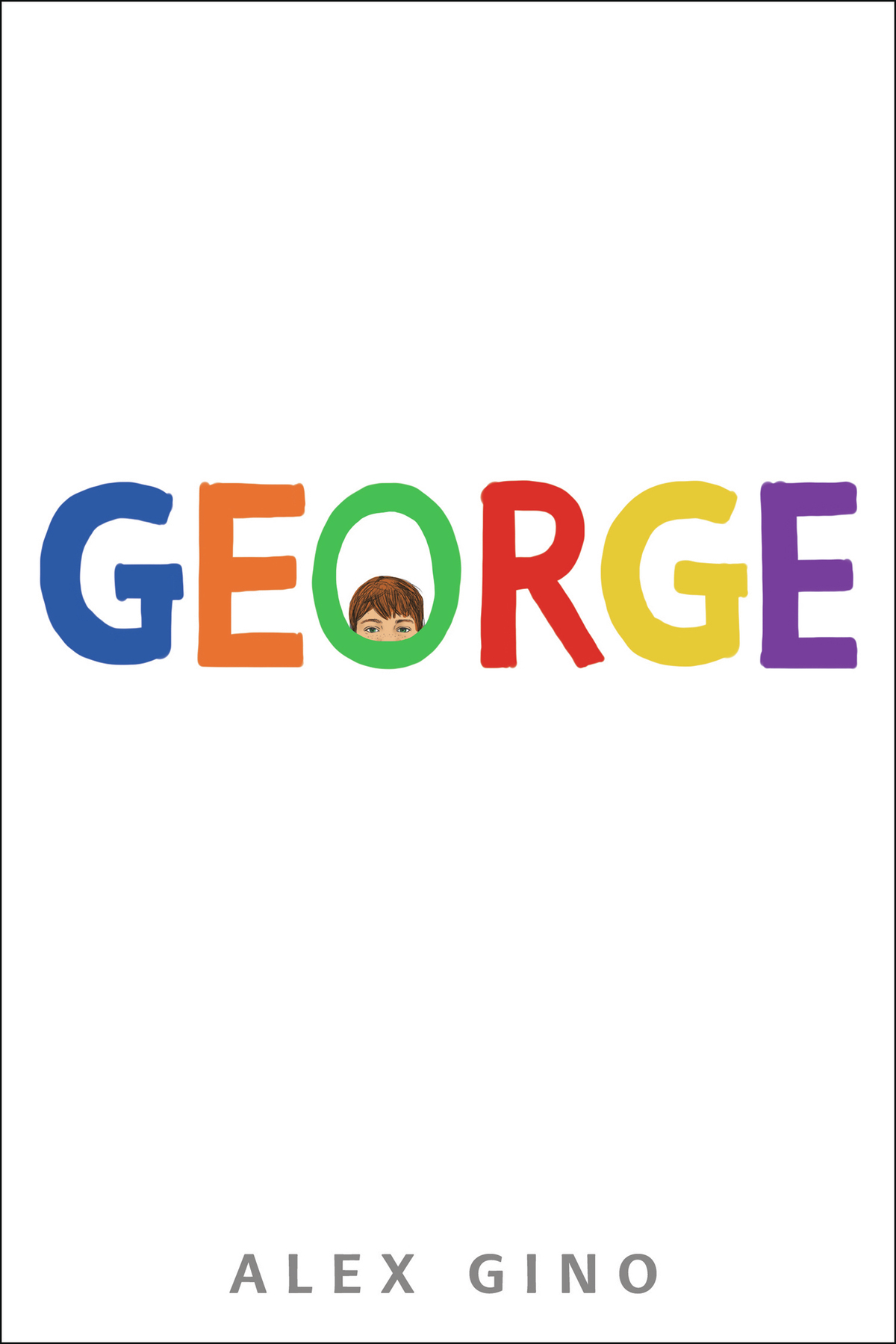
George is x, loves to read and has a best friend named Kelly. Everyone thinks George is a male child, simply she doesn't feel similar i.
George is a transgender fourth-grader. She's the heroine of a new book intended for readers in grades 3 to 7 and published past Scholastic, one of the largest children's publishing companies in the world. Author Alex Gino started writing George well before transgender people began actualization besides-rounded characters on Tv shows or the covers of major magazines — non to mention having much opportunity to tell their own stories inside mainstream media.
Gino grew upwards on Staten Isle, studied education at the University of Pennsylvania and taught unproblematic schoolhouse briefly before becoming a test prep coach and author. Gino prefers using the pronoun "they" rather than "him" or "her" when referring to themself. (The singular "they" is anarchistic, rather than wrong. It can exist constitute in the Oxford English Dictionary, likewise equally in the works of Chaucer and Shakespeare. And nobody else has to utilise it to refer to themselves if they don't want to.)
Conventional gender pronouns just don't piece of work for Gino, the author says. Oh, and here's Gino's Twitter bio: "Fat queer trans activist, glitter liberationist, urban gardener, sourdough bakery and then some."
"Someone this morning asked me online, 'Why do you place as a fat queer, similar, why do you label yourself, why don't you just be who you are," Gino sighs. "Well, I am a fat queer. I don't say that with shame. And I have no reason to retrieve these are horrible things that I should exist keeping secret. And in that location are plenty other fat queer urban gardener sourdough bakers who might similar to know that they're not the only one."

Author Alex Gino hopes George will help transgender kids experience less lonely. Blake C. Aarens hide caption
toggle explanation
Blake C. Aarens

Writer Alex Gino hopes George will aid transgender kids feel less alone.
Blake C. Aarens
Gino hopes George will help some kids know they're also not the only ones. Meanwhile, Scholastic believes the volume is for everyone. The visitor is known for publishing the Harry Potter and Hunger Games series, massively pop books that sell millions of copies. With George, information technology settled on an initial press run of fifty,000 copies. Editorial director David Levithan puts that number in perspective.
"Fifty thousand is pretty amazing for a debut author writing a middle class book that isn't part of a series," he says. "No wizards, no Greek myths, no activity adventure. It's merely one girl'southward story."
Selling this particular daughter'due south story to a mass market meant employing a like strategy the company used with The Hunger Games. It's kind of crazy to remember now, only that volume was initially seen equally a potentially difficult sell. Afterwards all, it's nigh kids killing each other. But Levithan said that The Hunger Games is like George in that people may relate to the story more than they might call back. "Once you read the book, you understand the volume," he said. The trick was getting George into as many readers' hands as possible. The company sent it to 10,000 teachers, to children's librarians and took Gino around to major book fairs, including Winter Institute, run by the American Booksellers Association.
"All of the booksellers had a story to tell Alex about a trans kid that they knew, a trans kid in their family, a trans developed who worked in their store," Levithan recalls. "And it wasn't only the coasts, and it wasn't just sort of the liberal hotbeds. It was actually booksellers from every state proverb, 'Oh goodness. Nosotros demand this book and I know exactly who I'one thousand going to give it to.'"
Since 2000, hundreds of kids' books featuring transgender characters have come out. They're mostly cocky-published and generally picture books or books for teenagers. There's virtually nothing in the center, says j wallace skelton, who studies transgender representation in children's literature, works to forestall gender-based violence in public schools and is a transgender male parent of three.
Wallace skelton says calling the book George when the chief character identifies as Melissa finer reinforces a sense of the child as a male child, rather than the girl she knows herself to be.
Gino said they appreciated that betoken.
"If I were going to proper name [the volume] now, I would not have washed that," Gino says. "Because it is the assigned name, not her chosen name. When I started the volume in 2003, the proper name of the book was Girl George — which was conspicuously an homage to Boy George. And then when Scholastic got it, one of the first things they did was, they cut off 'Girl' because they wanted to open up the audience. And I didn't even find, in all of the things that happened, that I take effectively dead-named my main graphic symbol."
By dead-naming, Gino means using the name that a person does not desire used. "Then I do experience conflicted about that."
Still, wallace skelton says he's a fan of George. He peculiarly liked how it handled violence toward its main character. Transgender people are still unduly marginalized, harassed, fifty-fifty killed. In George, the main graphic symbol faces bullies, but she's non powerless in the face of their torment. And it's non what shapes her. Melissa plays video games with her brother, dreams virtually a starring role in the school play and visits the zoo with her best friend.
"It's not just, 'This is a trans narrative,' " wallace skelton says. "This is a narrative about a immature person who is very much trying to become who they are."
Similar much of the best children'due south literature, he says, George is about existence true to who y'all are, being kind and learning well-nigh people both unlike — and maybe, similar to you lot.
Source: https://www.npr.org/2015/08/27/434277989/-george-wants-you-to-know-she-s-really-melissa
0 Response to "george Wants You to Know: Shes Really Melissa"
Post a Comment